
Artificial rockwork: what it is made of and why it lasts
Artificial rock is only as good as the system hidden beneath its surface. We explain which layers it is built from, why water and frost are its main enemies, and what to ask a contractor before you approve a design.
A rock is a system, not just a surface
In a photograph you judge texture and colour. Whether a rock lasts a few seasons or many years, however, depends on what you cannot see: the load-bearing structure, the core, the reinforced layers, the sculpted surface and the protection. Two rocks that look alike from a distance can have completely different service lives.
That is why we build artificial rockwork, sculptures and themed facades as a complete system, not as decoration applied to whatever is underneath. Every layer is chosen for the loads, the weather, contact with water and the intensity of use.
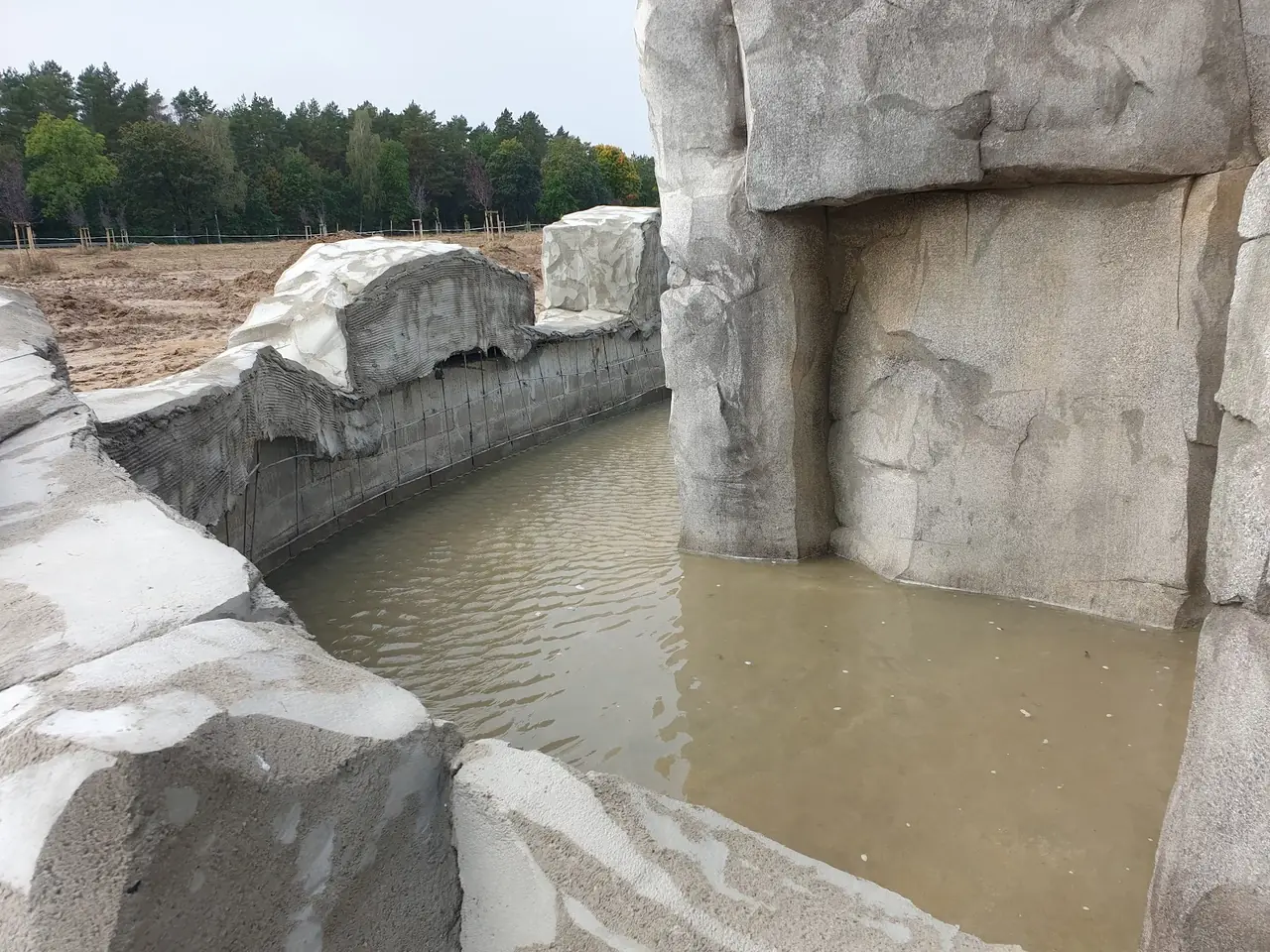
Construction photos show this clearly. Before a rock takes on its final appearance, it spends a long time as a raw structure: masonry or a frame, mesh and successive layers of mortar. This stage decides how the piece will age, so it is not worth shortening or simplifying.
Layers: from structure to protective coating
A typical build-up starts with a load-bearing structure in steel or concrete. Where weight matters, the form is built on a lightweight EPS or XPS core. On top come layers reinforced with mesh and composites, and only then the sculpted surface in hand-carved architectural concrete. The whole is finished with colour, patina, sealers and exterior coatings.
Depending on the project we use steel structures, reinforcement, metal or composite mesh, and hand-carved cementitious and polymer-modified systems. On large projects hand carving can be combined with sprayed application.
Each of these layers has a different job. The structure carries the loads and fixes the piece to the ground or the building. The core provides volume without excessive weight. The reinforced layers provide strength and limit cracking. The surface gives texture, and the protection slows down the effects of water and UV. If one of them is left out or badly chosen, the others cannot make up for it.
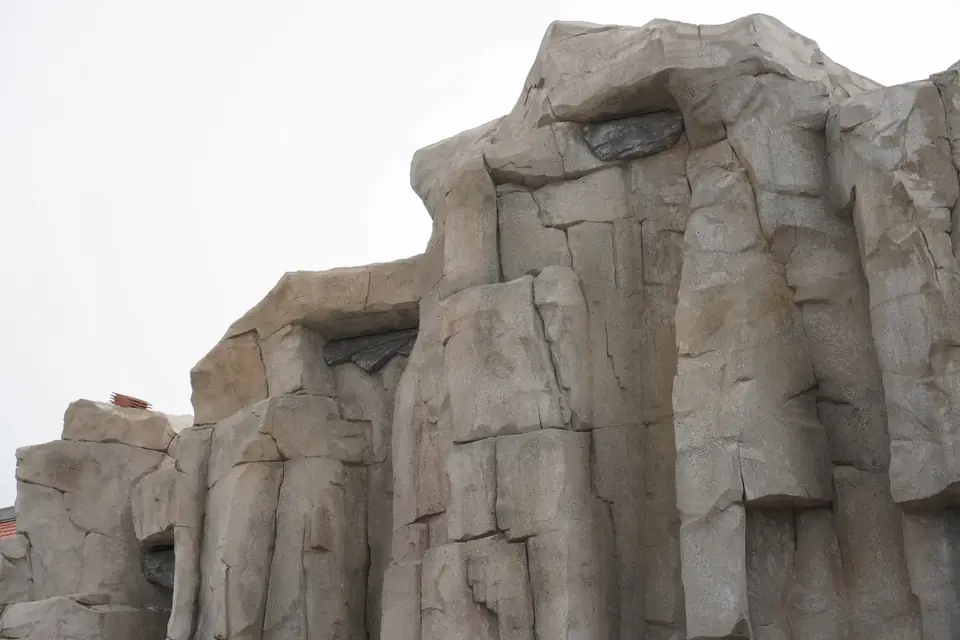
We sculpt the surface by hand: fissures, geological strata, erosion and fractures. Colour is built up in layers, from the base coat through glazes and dry-brushing to patina and accents, so the rock looks natural both close up and from a distance.
Water, frost and drainage
Many of the problems we see on repair jobs start with water. Moisture that gets beneath the surface freezes in our climate and forces the layers apart from the inside. Hairline cracks gradually turn into cracks, and cracks into delamination.
That is why drainage, falls and waterproofing are discussed before sculpting, not after. For waterfalls and water features, watertightness, outlets, services and maintenance access must be agreed before the first texture is carved. Hydraulics, pumps, filtration and waterproofing are designed and installed by specialist firms; we are responsible for the artistic layer and its integration with the technical systems.
In practice this comes down to a few simple questions: where will rainwater run off, is there drainage behind the rock or wall, how are the junctions with the ground and the building protected, and how will maintenance staff reach the pumps and services without damaging the scenery.
Exposure and use
A rock indoors, a rock by a pool, a rock in an animal enclosure and a rock beside a ride all work in different conditions. UV radiation, pool chemistry, cleaning and contact with children, animals and thousands of visitors all matter. We do not use one system for everything.
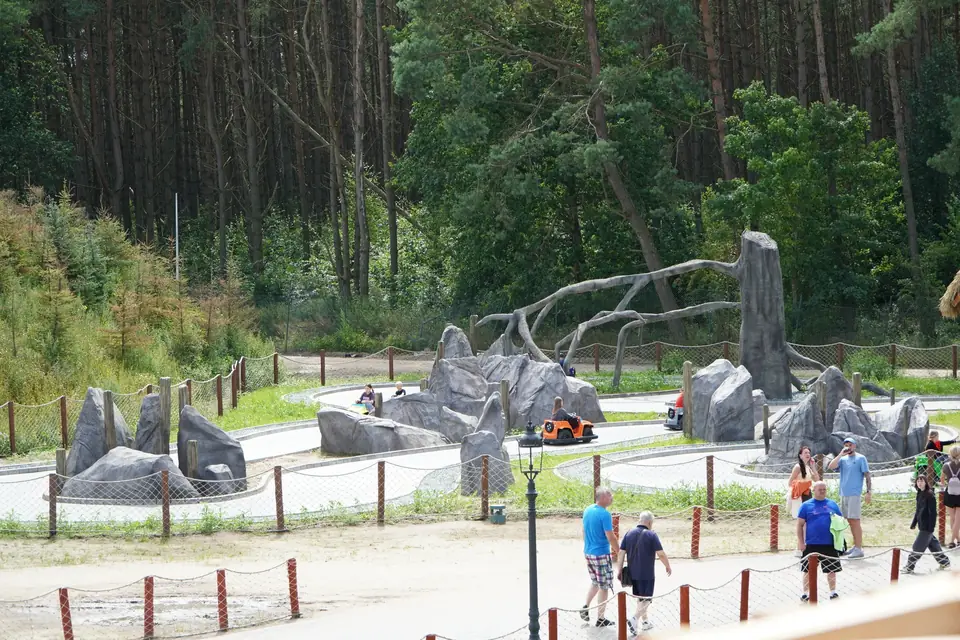
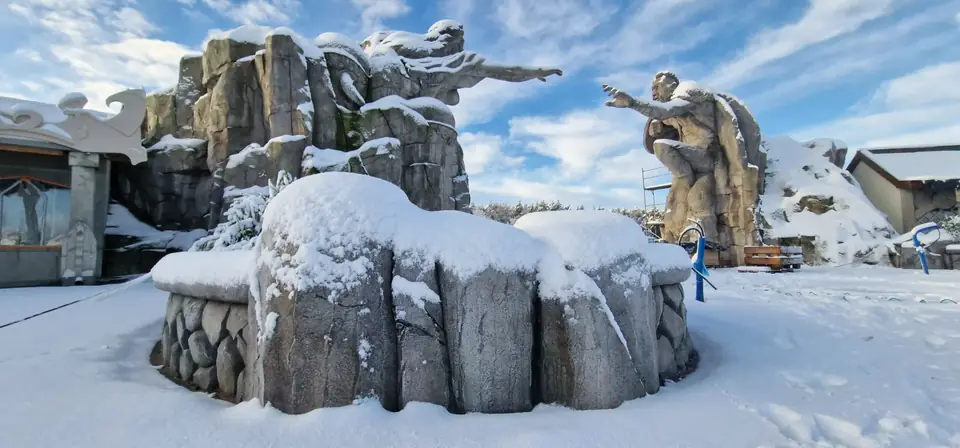
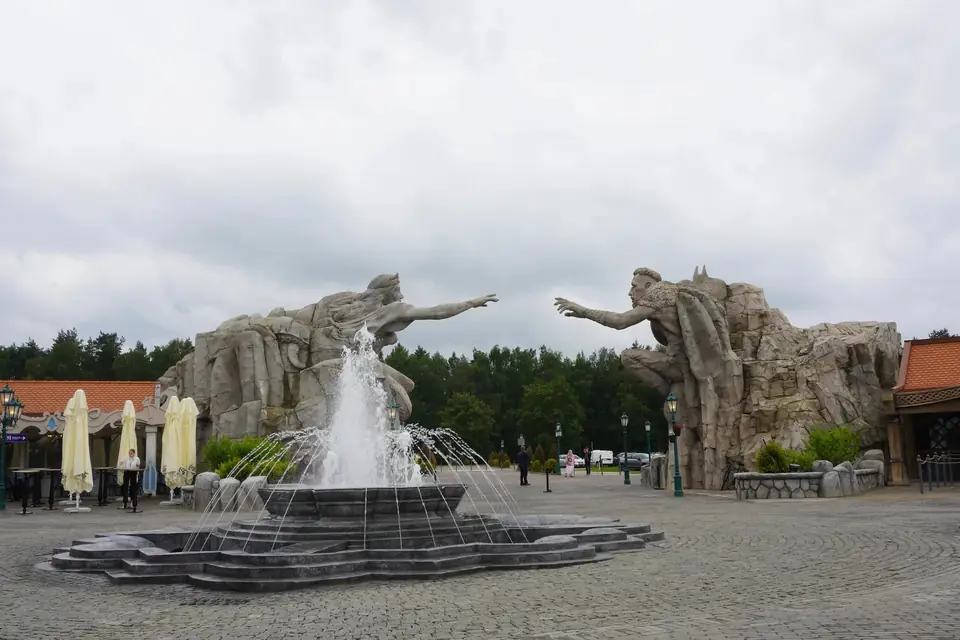
One example is the rockwork and deadwood forms along the Deadwood Drift ride at Hossoland. Every element was made for year-round outdoor exposure, including winter under snow.
Texture and colour: realism close up and from afar
A rock in a park is seen from several distances at once: from the path, from the ride, from the far side of the water. Colouring a form viewed from tens of metres away is a different task from finishing a detail right next to the visitor.
That is why we study the textures of natural stone, geological forms and shades. Instead of a single uniform colour, the surface is built from a base coat, glazes, dry-brushing, local discolouration, contrasts, patina and signs of wear. On larger projects we prepare samples and reference sections so the colour direction can be approved before the whole surface is finished.
An honest word about maintenance
No outdoor artistic feature should be described as completely maintenance-free. We build durable, low-maintenance systems, but long-term durability also depends on drainage, waterproofing, site conditions, inspections, cleaning and protection from damage.
A client who understands these relationships asks better questions before approving a design. The hidden defects of artificial rockwork, materials, drainage and coatings are covered in more depth by the company's founder, Aleks Svirydzenka, in his book Truth About Artificial Rockwork.
Before approving a design, ask the contractor about the layer system, the drainage method, the type of protective coating, maintenance access and the scope of the warranty. The warranty period and terms depend on the type of project, materials, location and exposure, and are ultimately set out in the offer, the technical specification and the contract.
Questions and answers
What is artificial rock made of?
Usually a steel or concrete structure, reinforcement and mesh, finished with hand-carved cementitious and polymer-modified layers. Lightweight forms are built on EPS/XPS cores. The make-up of the system depends on the project and the exposure.
Is outdoor artificial rockwork maintenance-free?
No. We build low-maintenance systems, but every outdoor piece needs inspections, cleaning and protection from damage. We help plan inspections and carry out repairs.
Do you also build rockwork for homes and gardens?
Yes: retaining walls, garden grottoes, poolside rocks, cellars and rock-style entrances. To get started, a location, approximate dimensions and photos of the site are enough.
More articles
Knowledge →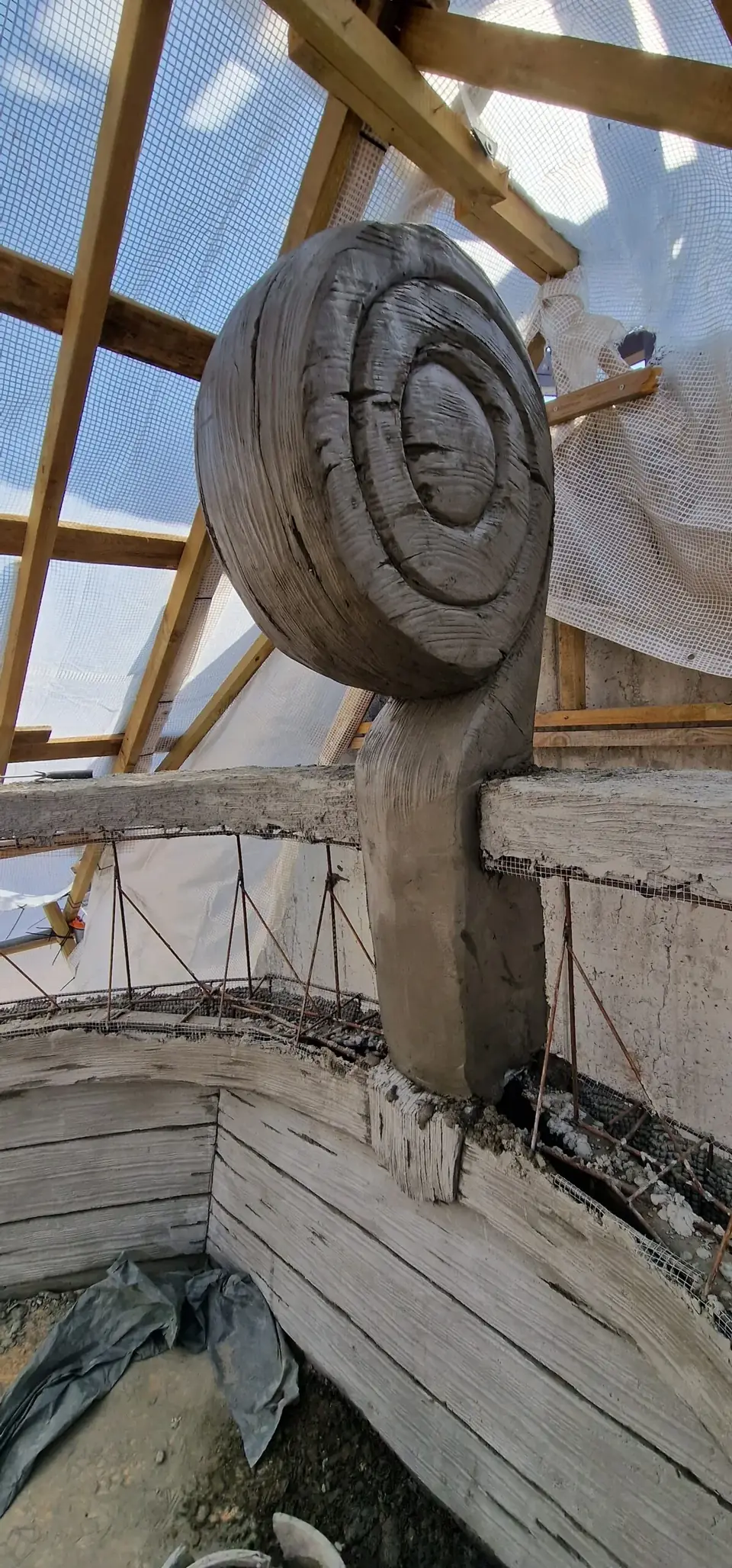
Do you have a complex themed or sculptural package to deliver?
Send drawings, visualisations or a short description. We review every brief and reply with a concrete next step.
Architects and general contractors: Send the project documents