
Sculptural concrete, GRC, EPS, FRP: choosing materials
Material is a tool, not an end in itself. We do not sell one technology: we match it to the piece, the site and the way it will be used. Here is how we think about sculptural concrete, lightweight cores and fibre-reinforced composites.
Requirements first, then material
A design has to impress, but it also has to survive transport, installation, weather and heavy use. So before any material is named, we establish the scale of the piece, the installation site, the weather conditions, the loads, contact with water, how it will be split into modules and how it will be accessed for maintenance.
A large outdoor piece needs different solutions from a lightweight indoor set element, a sign, or a feature visitors will touch every day. In practice we most often combine several technologies in one piece.
How the piece will be used after handover also matters. An element that needs maintenance access, an element touched by children and an element seen only from a distance may each need different surface layers and a different fixing method.
Sculptural concrete and cementitious systems
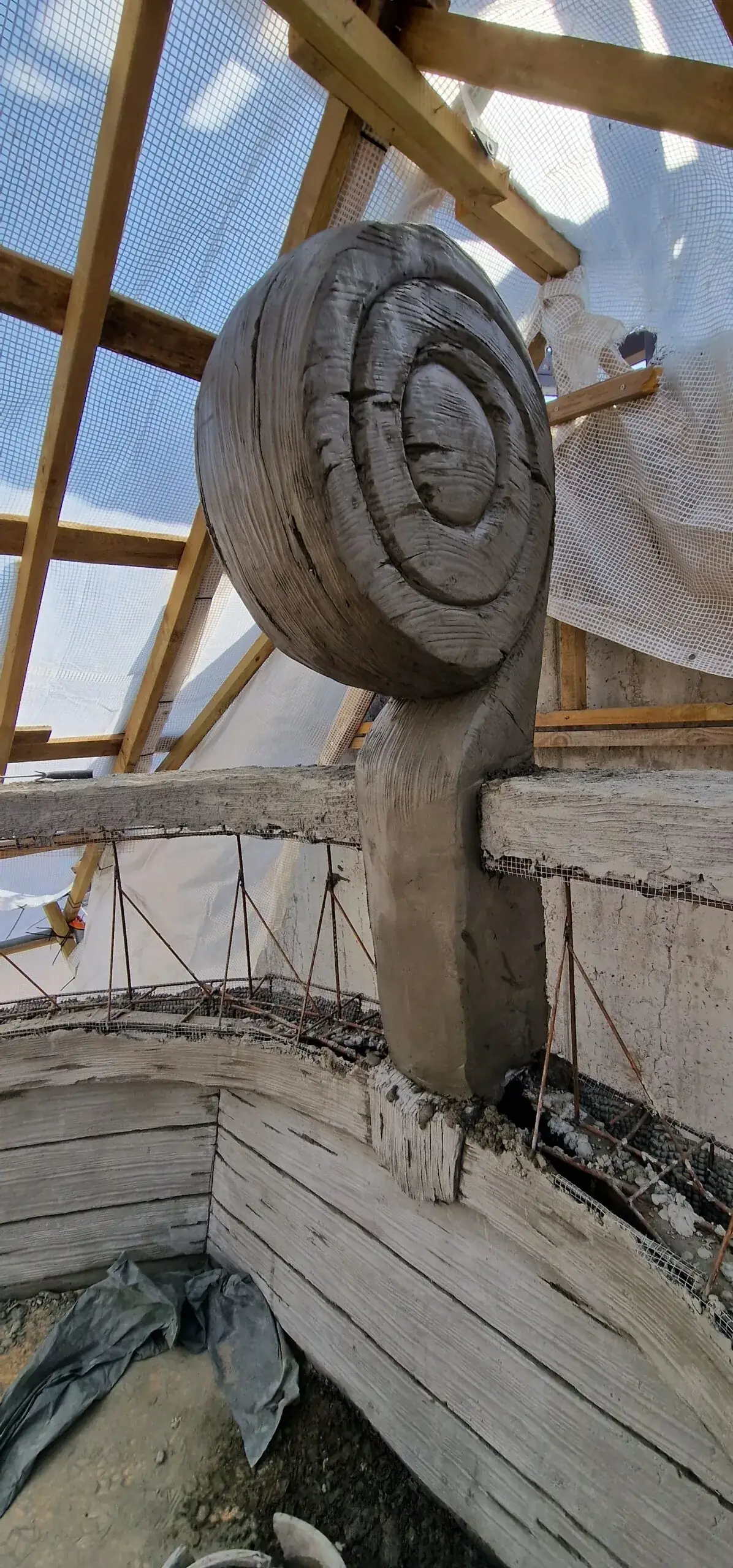
This has been the foundation of our work since our earliest years. Architectural concrete stone carved directly on the wall creates a monolithic surface: every stone, joint and fracture is made by hand, the pattern never repeats, and the cladding wraps seamlessly around corners, arches and unusual details.
We use cementitious and polymer-modified systems on facades, artificial rockwork, sculptures and water features. Their advantage is that the surface can be carved by hand at full scale, then finished with multi-layer painting and a coating matched to the exposure.
Sculptural concrete is not a single product but a family of solutions. Mixes and reinforcement are chosen for the substrate and the conditions the surface will work in. We also pass this knowledge on in training courses: carving architectural concrete stone with and without moulds, multi-layer colouring and patination, and preparing mixes for specific conditions.
EPS and XPS: a lightweight core for the form
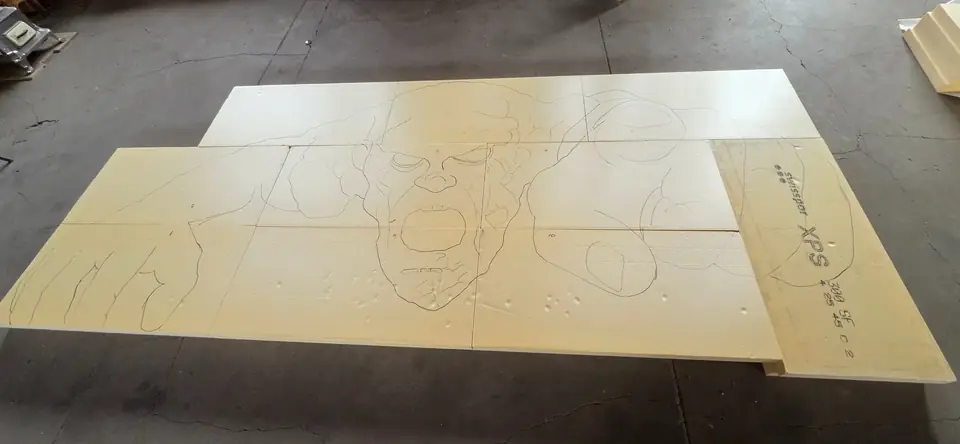
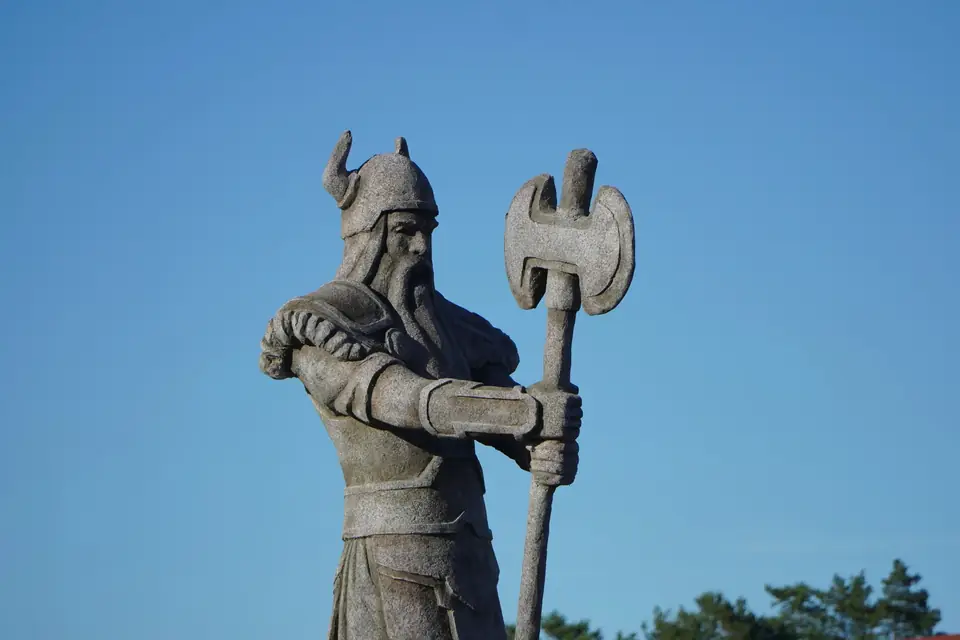
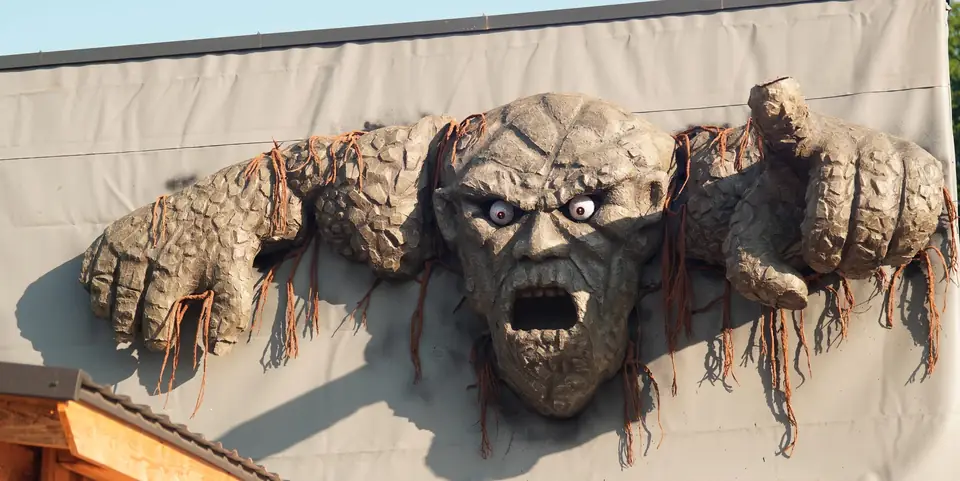
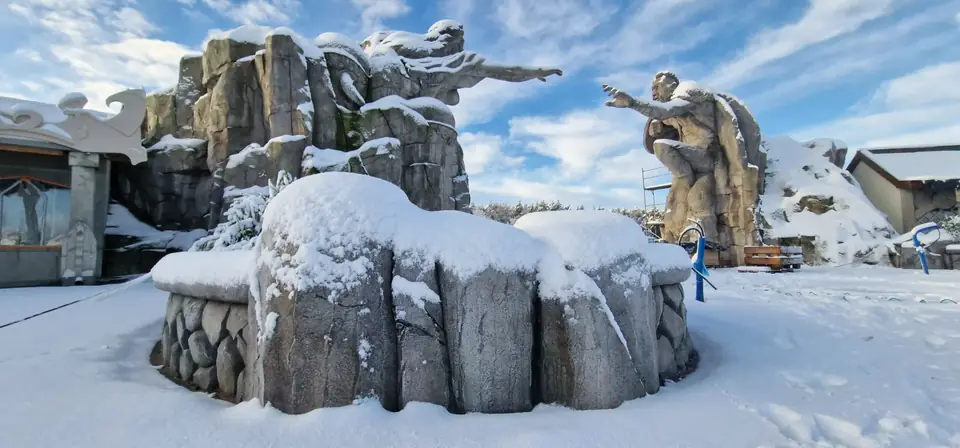
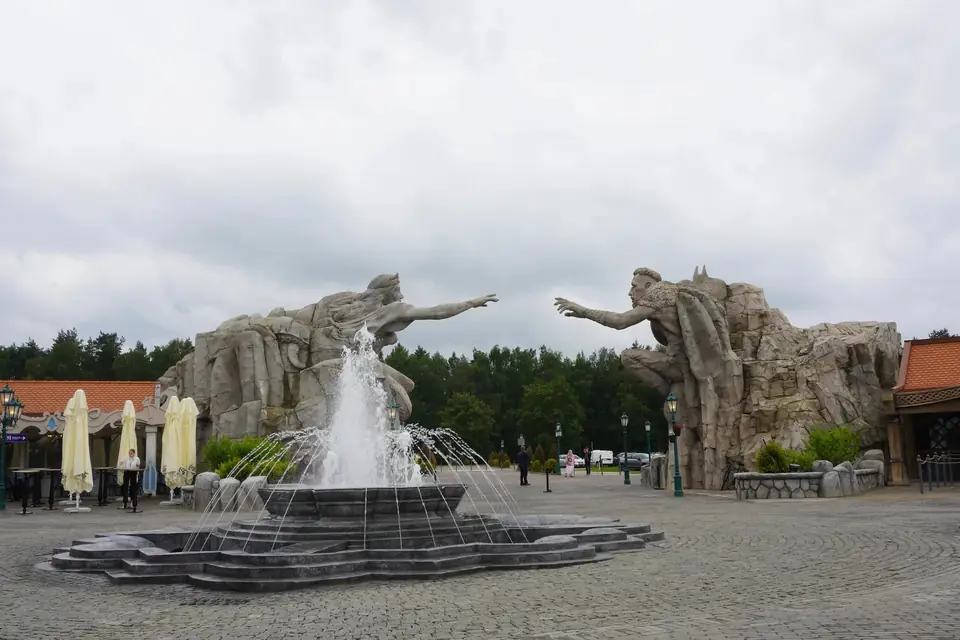
Expanded (EPS) and extruded (XPS) polystyrene make it possible to build a large form at low weight. We turn to them when reduced weight is required, for example for a sculpture mounted above an attraction entrance, such as the Stone Guardian. Files for CNC milling of the cores can be prepared from the 3D model.
The core on its own, however, is neither a finish nor a structure. It needs a load-bearing frame, a reinforced shell and a suitable surface layer. Lightness without these layers means a piece that is vulnerable to mechanical damage.
The boards themselves also differ. XPS usually has a closed-cell structure and a higher density than EPS, so it is often chosen where resistance to pressure and moisture matters. The final choice, though, depends on the whole system rather than on a single board. The core can be hand-cut from a template or milled from a 3D model.
GRC and FRP: fibre-reinforced composites
GRC is glass-fibre reinforced concrete, and FRP is fibre-reinforced plastic. Both combine relatively thin sections with strength, which makes them well suited where lightness, repeatable elements or off-site prefabrication matter.
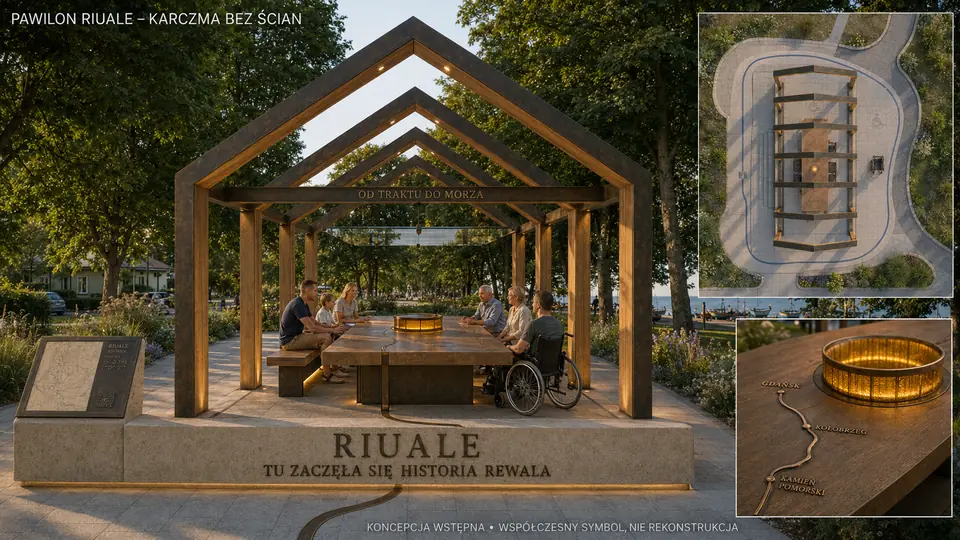
In our systems, fibre-reinforced composites appear as one of the layers, not as the only material. In the Stone Guardian, strength comes from a glass-fibre composite shell over an EPS/XPS core. In the concept for the Rewal municipality, GRC is part of a shared material language alongside sculptural concrete, timber in touch zones, mineral pigments and concealed lighting.
Combining technologies in one piece
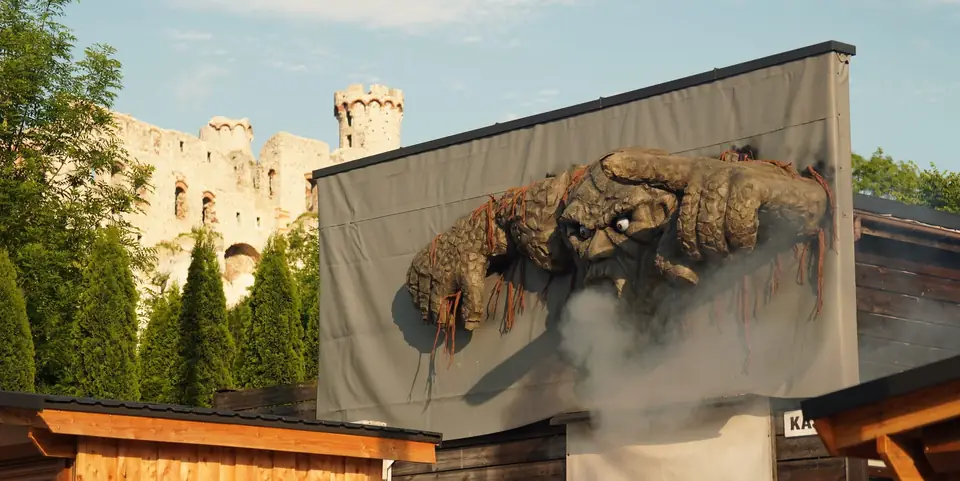
A good example is the Stone Guardian system at Park Ogrodzieniec: a steel frame as the structure, an EPS/XPS core for a lightweight form, a glass-fibre composite shell for strength, lightweight polymer concrete as the sculpted surface, scenic painting for realism and a clear protective coating. Each layer has a different job.
We also develop our own materials. Artisan Sculpt Epoxy Universal, an epoxy sculpting compound, is at the research and development stage: it is not a commercially available product, and independent laboratory testing is the next step. On our projects we use systems proven in practice.
How the decision is made in practice
On every project we ask similar questions. Will the piece stand outdoors all year round? Will it be in contact with water, pool chemistry or salt? Will visitors touch it, sit on it or climb on it? Does it need to be transported in sections and installed by crane? Do lighting, sound or smoke services need to run inside the form?
The answers lead to a specific layer build-up. If the client or architect already has a material specification, we work to it, and on complex projects we propose samples or mock-ups before production begins. Where regulations require formal structural calculations, they are carried out or approved by a licensed structural engineer in the country concerned.
Questions and answers
Which material is best for artificial rock or sculpture?
There is no single best one. We match the system to the project requirements, location, exposure and expected durability, and on many pieces we combine several technologies.
Is a lightweight EPS core suitable outdoors?
Yes, as part of a system: with a load-bearing structure, a reinforced shell, a sculpted surface layer and protection. The core alone, without these layers, is not an outdoor solution.
Can you work to an architect's specification?
Yes. We work to design intent, drawings and design assumptions. On complex projects we recommend samples or mock-ups before production.
More articles
Knowledge →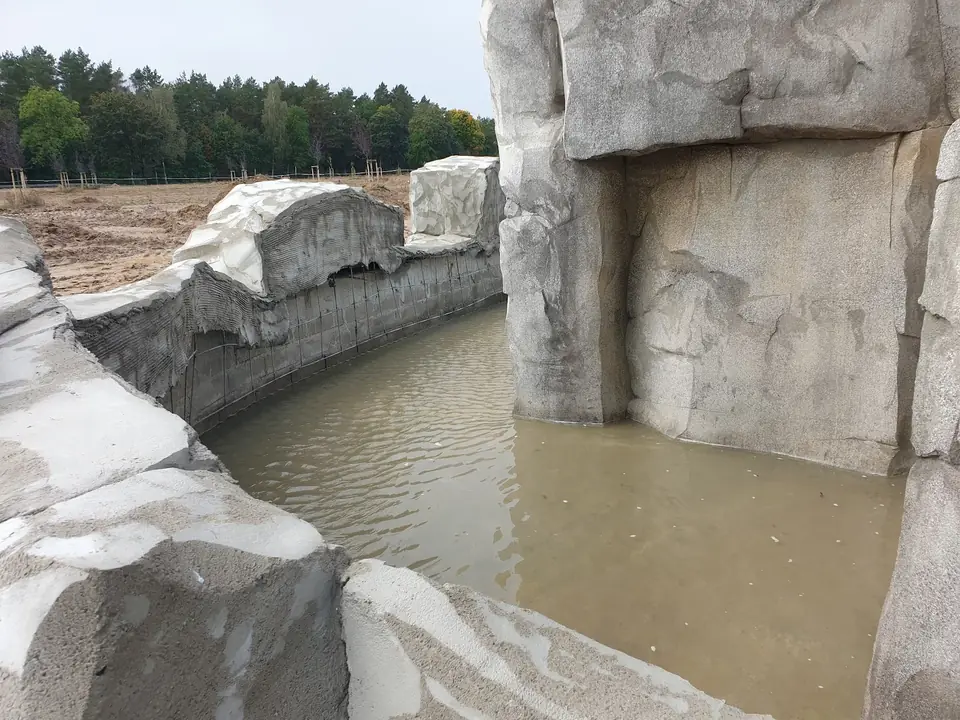
Do you have a complex themed or sculptural package to deliver?
Send drawings, visualisations or a short description. We review every brief and reply with a concrete next step.
Architects and general contractors: Send the project documents